
The Other Side of Strength

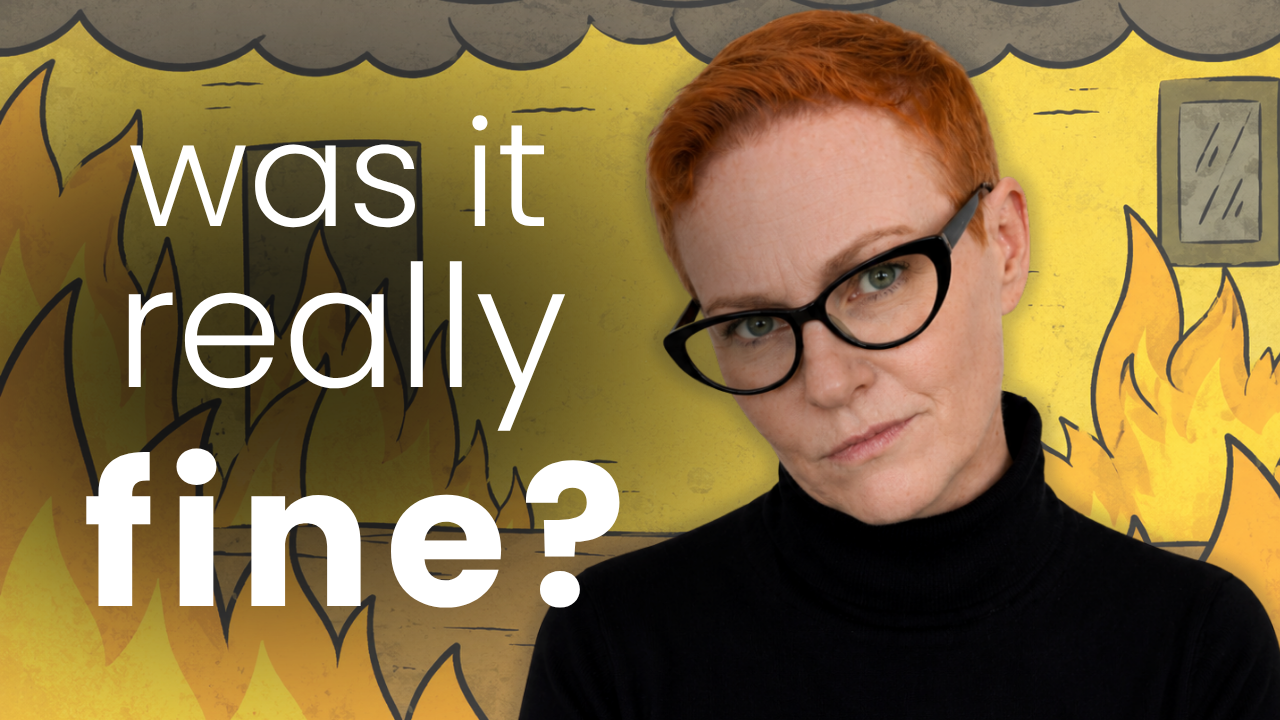
For most of my life, I thought strength was an unquestionable virtue.
Strength got things done. Strength paid the bills, raised the children, survived the divorce, cared for aging parents, and showed up for work when life felt impossibly heavy. Strength was what responsible adults did. It was what capable women did. It was what many of us were praised for.
If someone had called me strong twenty years ago, I would have taken it as a compliment. In many ways, I still do.
But lately I've been wondering whether there comes a point in life when strength quietly changes its shape.
Not because it becomes wrong.
But, because it becomes unnecessary.
That may sound strange, especially to women who have spent decades being the dependable one. Many of us learned early that emotions were inconvenient, overwhelming, or simply unwelcome. We learned to read the room before expressing our needs. We learned to solve problems before asking for help. We learned that competence earned approval while vulnerability often felt risky.
Over time, those lessons became habits. The habits became identity. Eventually, being "the strong one" stopped feeling like something we did and started feeling like who we were.
The problem is that identities built in one chapter of life don't always fit the next.
As I've entered what I affectionately call my third act, I've noticed something interesting. The circumstances that required so much armor are no longer present in the same way. The children are grown. The career battles have largely been fought. Some relationships have ended. Others have softened. The emergencies that once demanded constant vigilance have gradually given way to quieter questions.
Questions like:
· Who am I now?
· What do I want?
· What would I do if I wasn't spending so much energy holding everything together?
These aren't crisis questions. They are reinvention questions.
And reinvention has a way of exposing old survival strategies.
One of the great surprises of this stage of life is discovering that the things which helped us survive are not always the same things that help us thrive. Hyper-independence, emotional self-containment, and relentless competence are incredibly effective tools when life demands endurance. They are less helpful when life begins asking for curiosity, connection, creativity, and vulnerability. That transition can feel surprisingly uncomfortable.
Many women assume that because they are no longer actively struggling, they should feel relieved. Instead, they often find themselves crying unexpectedly, questioning long-held assumptions, or feeling drawn toward dreams they had quietly set aside years ago. They wonder why they feel unsettled when, on paper, everything appears fine.
I don't think it's because something is wrong. I think it's because something is waking up.
For years, the phrase "I'm fine" served many of us remarkably well. It allowed us to keep moving. It allowed us to function. It allowed us to survive seasons that required enormous resilience. But survival strategies have a tendency to outlive the circumstances that created them.
The armor stays long after the battle is over.
The armor has a way of lingering long after the circumstances that required it have changed. Because it protected us so effectively, we rarely stop to examine whether it is still serving us. We simply continue wearing it, often without noticing the effort it requires.
Looking back, I wonder whether some of the tears, restlessness, and longing that appear in this season of life are not signs of collapse at all. Perhaps they are evidence that parts of ourselves which have been waiting patiently for decades are finally asking for our attention. What once felt dangerous may no longer be dangerous. What once needed to remain hidden may finally be safe to emerge.
That possibility feels important to me. Not because I believe strength is bad. Quite the opposite. Strength built beautiful things in my life, and I suspect it built beautiful things in yours as well.
I've come to wonder whether the cracks in the armor deserve a little more respect than we usually give them. Our first instinct is often to patch them, reinforce them, and return to business as usual.
Perhaps there is another possibility. When we stop rushing to repair every crack, we allow the light of understanding an opportunity to seep in and the pressure of “holding all together” to leak out in the opposite direction.
The answer is not to reject our resilience or dismiss the adaptations that carried us this far. The answer may be to thank them, because the armor did its job. It protected us when we needed protection. It carried us through situations that required courage, endurance, and determination even when our reserves were depleted. It deserves our gratitude. But gratitude does not require permanent residence. Sometimes the healthiest thing we can do is allow an old strategy to retire.
Perhaps the opposite of strength is not weakness after all.
Perhaps the other side of strength is authenticity. Perhaps it is the vulnerability to ask for reassurance without apologizing. The ability to acknowledge disappointment without immediately minimizing it. The liberty to pursue a dream without first proving that we deserve it. And, most of all, the freedom to stop performing "fine."
And, I admit with full transparency that I find that thought both comforting and a little unsettling. After all, if we put down the armor, who are we underneath it?
Maybe that is the real invitation of reinvention.
And the next time we hear ourselves say, "I'm fine," we can pause for a moment and ask the simpler and gentler question:
"Am I?"
That small moment of curiosity may be where an entirely new chapter begins.
A bientot,
Rondi et Ralph
PS> Ralph was really doing his job in this IG post ... he was co-regulating while doing DPT, he just looked a little dramatic in the process, lol